Insight
PLA vs Bagasse vs FSC Paper: Choosing the Right Compostable Packaging Material

Foodservice brands moving away from plastic packaging usually run into the same question early on: PLA, bagasse, or FSC-certified paper — which one actually fits the product? Each material has a genuine strength, and picking the wrong one for the job tends to show up fast, either as a soggy container, a melted lid, or a compostability claim that doesn’t hold up under scrutiny.
Here’s how the three compare, and where each one makes sense.
FSC-Certified Paper and Kraft Board
FSC certification applies specifically to wood-fiber materials — kraft paper, cardboard, and paperboard sourced from responsibly managed forests. It’s the right claim for straws, cups, bowls, and food boxes made from genuine paper stock — see Corncomp’s FSC-certified Menu Boxes and FSC-certified Paper Bowls — and it’s the only one of the three that carries a traceable chain-of-custody guarantee: every certified product can be traced back to its forest source.
Where FSC paper falls short on its own is moisture and grease resistance. Uncoated paperboard softens quickly against hot liquids or oily food, which is why most paper packaging in foodservice use carries a coating, or gets paired with a separate lid or window made from a different material entirely.
Certain molded kraft paper food containers, such as Corncomp’s Natural Kraft Paper Food Container line, are separately DIN CERTCO certified for industrial compostability (DIN EN 13432, ASTM D6400) through Corncomp’s affiliated manufacturing entity, Ningbo Millionpack Co., Ltd. — a certification layer that sits alongside, not in place of, standard FSC chain-of-custody sourcing.
PLA (Polylactic Acid)
PLA is a plant-derived bioplastic made from fermented plant starch, most commonly corn. It’s the clearest of the three materials — genuinely transparent, not just translucent — which makes it the standard choice for lids, windows, and cold-drink cups where customers expect to see the product.
The tradeoff is heat tolerance. PLA softens at relatively low temperatures, so it’s not a fit for hot soups, coffee, or anything served straight from a fryer. It’s also industrially compostable rather than home-compostable, meaning it needs a commercial composting facility to break down as intended — in a landfill, it behaves much closer to conventional plastic. Corncomp offers PLA in a PLA Lid for its salad bowl range, and a heat-resistant crystallized-PLA option in its CPLA Cutlery line.
Bagasse (Sugarcane Fiber)
Bagasse is molded from sugarcane pulp left over after juice extraction, so it puts an agricultural byproduct to use rather than drawing on virgin material. It’s naturally rigid and considerably more heat-resistant than PLA, which is why it shows up most often in soup cups, hot food bowls, and takeout containers that need to hold their shape against steam and hot liquids.
Bagasse is compostable under the same BPI/ASTM D6400 framework as PLA, and Corncomp offers BPI-certified bagasse products under that framework — product-level certification applicability varies by specification. Because bagasse isn’t a wood-fiber material, it doesn’t carry FSC certification — a distinction worth knowing, since the two labels get mixed up often in supplier marketing. Corncomp’s related bagasse soup cup range is part of its Salad Bowl and Soup Cup/Bowl collection.
Side-by-Side Summary
| Material | Typical Use | Heat / Grease Performance | Compostability Context | Common Certification Route |
|---|---|---|---|---|
| FSC Paper/Kraft | Straws, cups, boxes, branded printing | Low (needs coating) | Not a compostability certification on its own; select molded containers (e.g. Natural Kraft Paper Food Container) separately DIN CERTCO certified | FSC Chain of Custody (+ DIN CERTCO for select specifications) |
| PLA | Clear lids, windows, cold cups | Low | Industrially compostable, not home-compostable | BPI Compostable (ASTM D6400) for select certified products |
| Bagasse | Hot soup cups, bowls, takeout containers | High | Industrially compostable under the same BPI/ASTM D6400 framework as PLA | BPI Compostable (ASTM D6400) for select certified products |
Certification applicability varies by product and specification — see certificate numbers and verification links on our Certifications page.
Most Packaging Systems Use More Than One
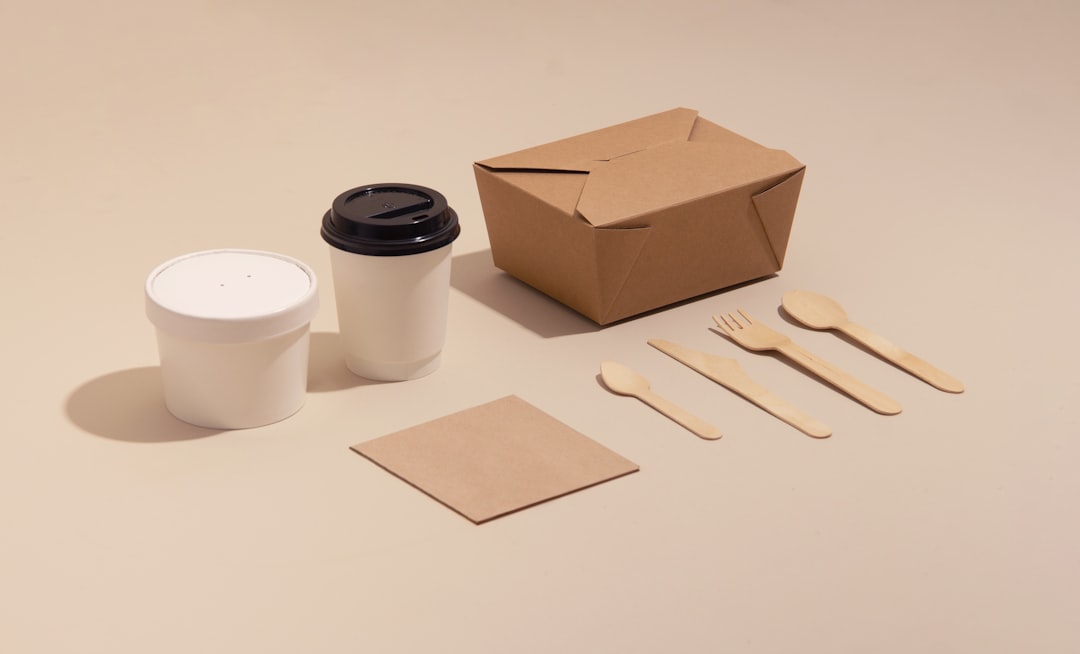
In practice, few foodservice brands standardize on a single material. A common setup pairs an FSC-certified kraft box with a PLA window for visibility, or a bagasse soup cup with an FSC-certified paper lid. Matching each component to what it’s actually good at, rather than forcing one material to do everything, tends to produce packaging that performs better and holds up to closer scrutiny on its sustainability claims.
Curious how FSC and BPI certification actually differ as claims, rather than materials? See our breakdown of BPI vs FSC certification, or our guide to verifying that a supplier’s certifications are real before relying on any of these claims.
Corncomp manufactures paper straws in-house and supplies selected PLA and bagasse products, including specifications covered by product-specific certifications. Manufacturing source and certification applicability vary by product and should be confirmed for the ordered SKU. See the full range in our product catalogue, or check specific certificate numbers and verification links on our Certifications page. For MOQ, lead time, and custom printing questions, our FAQ covers the details. If you’re sourcing for regulated markets, our guides to the EU Single-Use Plastics Directive and US state plastic packaging laws cover which of these materials are affected.
Need help selecting a material? Talk to us about your product and application, or contact us directly for a recommendation.